How to Set Reading Goals That Keep You Motivated

How to set reading goals is a question every book lover eventually asks themselves — especially at the start of a new year or season.
Making clear, realistic, and enjoyable targets can help you stay motivated, track your progress, and discover more books you love.
In this guide, we’ll break down steps for choosing your goals for reading and tips for adjusting them when life gets in the way. Whether you want to explore new genres or simply finish the works already sitting on your shelf, you’ll find the best approach for you.
What are reading goals?
A reading goal is more than a figure on a tracker — it’s a guiding framework that shapes your literary journey and keeps your enthusiasm alive. Whether you aim to get through five titles this year or fifty, having a clear direction can transform how you approach your TBR pile.
Benefits of setting a purpose for reading:
- Guidance without constraint – A plan offers a sense of orientation while still allowing space for spontaneity. You know your destination, but the route is flexible.
- Consistent momentum – Setting monthly or seasonal checkpoints makes progress visible, replacing uncertainty with a tangible sense of achievement.
- Broader horizons – Planning can nudge you toward works you might otherwise overlook, such as mixing modern thrillers with 19th-century novels, essays with memoirs, or experimenting with audiobooks.
- Rewarding milestones – Ticking off completed titles or reaching a set point in your schedule brings a satisfying rush — like giving yourself a well-earned badge of accomplishment.
Choosing the right type of reading goal
Not all objectives are created equal — the most effective ones match your lifestyle, preferences, and ambitions. The right choice depends on whether you’re seeking volume, variety, or deeper engagement with certain themes.
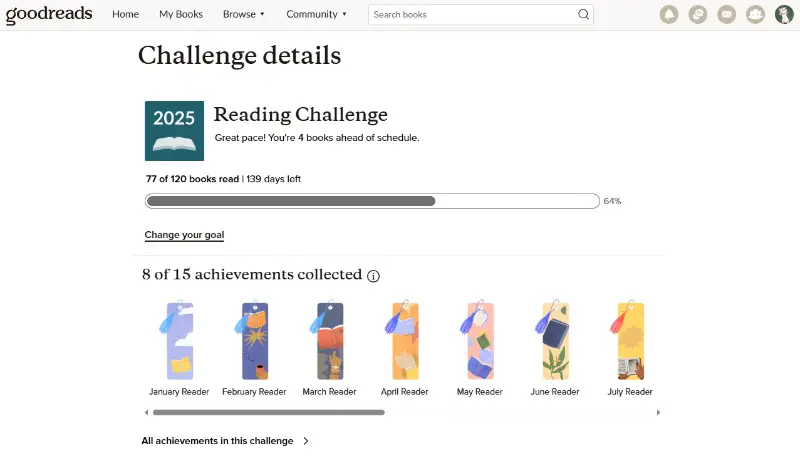
Numerical Reading Goal
If you thrive on measurable outcomes, setting a specific quantity can keep you focused. This could mean:
- A total number of books per year
- A daily or weekly page count
- A set number of minutes each day
Example: “I’ll read 30 minutes before bed five nights a week.”
This approach suits those who like clear, trackable progress.
Theme-Based Reading Goal
Rather than counting pages or titles, you might organize your year around a concept or subject. Possible ideas include:
- Focusing on a particular genre, such as science fiction or memoirs
- Pick works from different cultures or countries
- Exploring books set in a specific historical period
This type of aim works well for those who enjoy immersing themselves in a particular topic or diversifying their literary palette.
Skill-Oriented Reading Goal
Sometimes the objective is less about quantity and more about personal growth. You might choose books to:
- Strengthen vocabulary
- Improve professional knowledge
- Enhance critical thinking or analytical skills
Example: “I’ll finish one book on leadership each month to build management abilities.”
These targets transform reading into an intentional tool for self-improvement.
How to set reading goals that fit your life?
A smart goal for reading should blend seamlessly into your lifestyle. The purpose is to create something sustainable and enjoyable — not another source of pressure.
Assessing Your Schedule and Priorities
Start by looking closely at your available time:
- Map out your average week and notice when you have natural pauses — commutes, lunch breaks, or quiet evenings.
- Compare these moments with your energy levels; some people read best in the morning, others before bed.
- Decide whether it will replace another activity or simply fill unused gaps.
Even a short daily slot — 10 or 15 minutes — can lead to surprising yearly totals.
Setting Realistic Expectations
Rather than chasing an arbitrary number, anchor your goal to your own patterns:
- Reflect on your past year’s volume and pace.
- Adjust for known busy seasons (holidays, work deadlines, travel).
- Scale up slowly if you’re progressing faster than expected.
This approach avoids the frustration of constant catch-up.
Breaking down your goals into actionable steps
A reading goal is easier to reach when it’s divided into manageable parts. Instead of staring at a year-long challenge, you’ll work through smaller tasks that keep motivation alive and prevent overwhelm.
Create Micro-Goals
Large ambitions can feel intimidating, but splitting them into smaller checkpoints makes progress visible.
- Set monthly or quarterly milestones.
- Plan mini-challenges, such as “one short story collection this month” or “two chapters per week”.
- Track not just finished books, but also time spent reading.
Think of it like climbing a staircase — one step at a time still gets you to the top.
Integrate into Your Routine
Your daily habits can make or break your plan. Instead of waiting for “free time,” intentionally slot this process into your schedule:
- Read over breakfast or during your commute.
- Replace one scrolling session with a few pages.
- Keep a book (or e-reader) within arm’s reach in different parts of your home.
These small adjustments add up, often more than marathon sessions.
Reward Your Milestones
Celebrating small victories reinforces the habit:
- Treat yourself to a new bookmark, coffee outing, or even a fresh book.
- Share your results with friends or a reading group.
- Reflect on what you enjoyed about a completed title before diving into the next one.
Tracking your progress
Keeping an eye on your advancement makes it easier to stay committed and spot when adjustments are needed. Progress isn’t just about measurement — it’s about creating a visual reminder of how far you’ve come.
Digital Tools
Online platforms or custom spreadsheets allow you to log books, set goals, and visualize with charts and statistics.
| Tool/Method | Overview |
|---|---|
| Goodreads | Service to add books, track reading milestones, and share reviews. |
| The StoryGraph | Focuses on pace, mood, and tailored suggestions. |
| Spreadsheets | Customizable templates for genres, pages, and completion tracking. |
| Reading Apps (Libby, Kindle) | Many e-reading apps automatically record progress and highlights. |
| Icecream Ebook Reader | Desktop software for reading eBooks with embedded monitoring. |
Pros:
- Easy to update from anywhere with internet access.
- Can generate detailed stats (genres, average ratings, pace).
- Often include community features for sharing and discovering new titles.
Cons:
- Requires a device and sometimes an internet connection.
- Can become distracting if notifications or social features take focus away.
- May feel less personal than handwritten records.

Physical Trackers
Handwritten logs and bullet journals provide a tactile, creative way to record your journey, often doubling as a keepsake.
Pros:
- Encourages creativity with layouts, sketches, and decorative elements with notes.
- No need for devices, batteries, or internet access.
- Can be more reflective and mindful than digital methods.
Cons:
- Less convenient for quick updates on the go.
- No automatic statistics or genre breakdowns.
- Takes more time to maintain, especially for elaborate designs.
Conclusion
Setting reading goals isn’t about pressuring yourself into a strict schedule — it’s about creating a journey that excites and inspires you.
By choosing meaningful targets, breaking them into manageable steps, and tracking your progress in a way that feels rewarding, you can turn this process into a consistent and joyful habit.
Start small, stay flexible, and remember: the best reading goal is one that keeps you turning the page.
Expert Tech Writer